School life / Lincoln in the 1930s, Goole in the 1950s, Harrow in the 1970s, and a muddy field last Saturday
“Coffee, Actually Sir”: Seventy Years of Cross-Country Shortcuts
Our youngest asked whether his first cross-country race would have shortcuts. I said no, and then made the mistake of checking.
On Thursday our youngest asked whether his first cross-country race would have any shortcuts, and I told him there is no such thing as a shortcut. Then I spent the evening on the visitor comments of Goole on the Web, where former pupils of Goole Grammar School have been confessing since 2000. The first confession concerns a boy on Western Road who used to jog home mid-run, sit it out, and rejoin at a plausible moment, careful never to finish near the front in case he was picked for his House. One day the games teacher greeted his return: “Did you enjoy your cup of tea?” The reply, “Coffee, actually Sir”, did not help.
His sentence was a solo run to Boothferry Bridge one evening, to report back the height on the plate at the top. He got a little way along Airmyn Road, a friend came by on a bike, and he waited while the friend went to read the plate for him.
I closed the laptop. I opened it again.
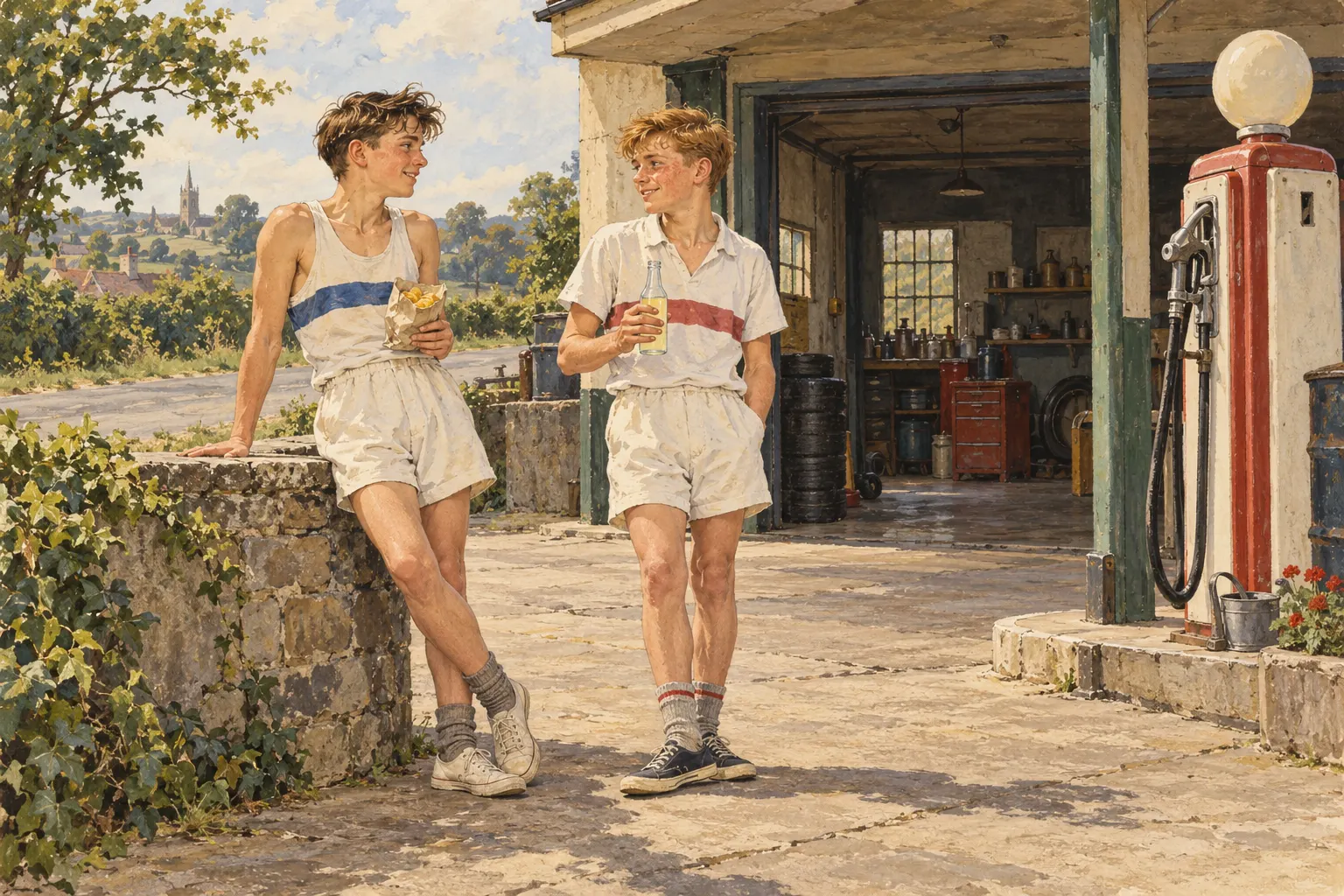
It is not a comments page. It is a route map. Dennis, at Goole Grammar from 1950 to 1955, had a father with the garage at the top of Airmyn Crossing, which became a pit stop for him and his classmates: a packet of crisps and a lemonade, then on to Boothferry Bridge and back to school. American cream soda, he adds, was the lemonade of the moment. Jan’s family on Murham Avenue had runners knocking to use the outside loo. James called home on the way round and rejoined the field, “sometimes in the lead”. The site itself records that the field near Boothferry Bridge was a favourite cut-through until the teachers started inspecting boots. “Anybody with muddy boots had to do it again.”
Nor is it a Goole problem. Stanley Newey, remembering Lincoln School in the 1930s, records three miles for the juniors and five for the older boys out along Wragby Road, with shortcuts common practice: “how could anyone be expected to run that far?” At Harrow County School for Boys, Dennis Orme, captain of cross-country from 1973 to 1975, remembers that some of the friends who marshalled home fixtures were in the cross-country option for a “skive”. His own happiest find was a gap in a hedge near Harrow School Farm, and a field nobody had ever seen. That was the captain.
So on Saturday I went to supervise. I had walked the course on Friday, found the hedge gap that saves four hundred metres, and stood in front of it with a flask, a Tupperware of orange quarters and a laminated route map. He came past at 11.06 in a pack of nine, took an orange without breaking stride and said, “Mum, you’re on the course.” A marshal moved me behind the tape. A second marshal asked me to stop feeding other people’s children.
I was the garage. I was the outside loo.
The finish was one field away through the hedge, or half a mile round by the path, and I wanted to be there when he came in. He finished twenty-third out of sixty-one, clean to the knee. I was the only person at the finish in muddy boots. In Goole I would have had to do it again.
Sources
- Goole on the Web, Schools: Dennis’s former-pupil comment, 30 June 2012
- Stanley Newey, Recollections of Lincoln School 1933–1943, Occasional Paper 45
- Dennis Orme, Harrow County School Cross Country Club
Notes from the School Gates is a light-hearted column: home scenes and family characters are invented; schools and public facts are real. About the column